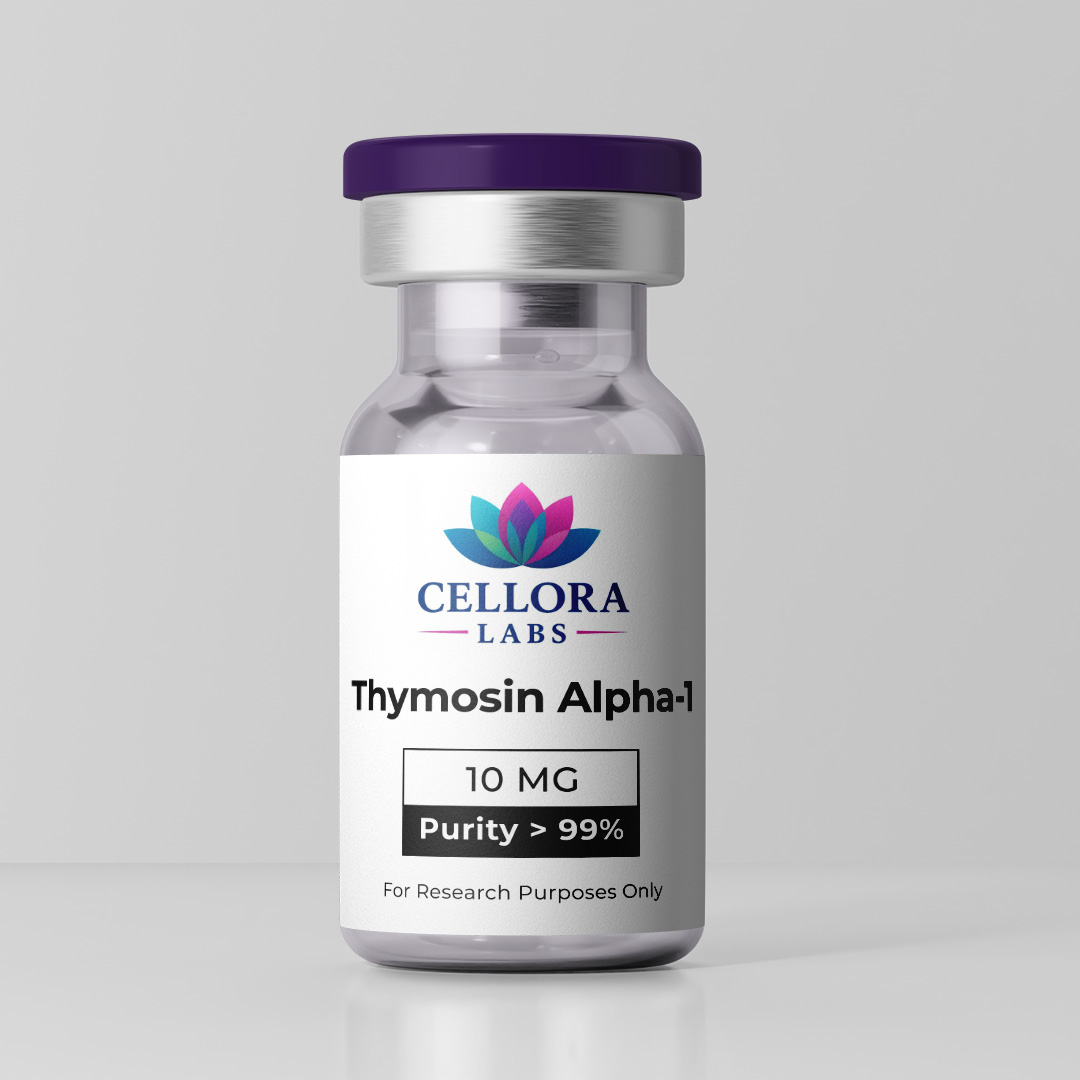
Thymosin Alpha-1 10mg | Immune Modulating Peptide for Advanced Research & Wellness Optimization
celloralabs.store
Welcome to CelloraLabs.store, where advanced peptide research meets precision science. This page explores one of the most widely studied immune-modulating peptides in modern biomedical research: Thymosin Alpha-1 10mg. Designed for research-focused applications, this compound is associated with immune system regulation, cellular resilience, and immune signaling pathways that are central to human biological performance.
This comprehensive guide is structured using a silo SEO architecture, meaning each section is designed to act as a self-contained topical authority cluster. This helps search engines understand relevance, depth, and contextual expertise—improving ranking potential for competitive peptide and research compound keywords.
Throughout this page, we will explore mechanisms, scientific background, research applications, biological pathways, comparative insights, and structured informational clusters that support strong SEO performance for celloralabs.store.
Silo 1: Understanding Thymosin Alpha-1
What is Thymosin Alpha-1?
Thymosin Alpha-1 10mg is a synthetic version of a naturally occurring peptide fragment originally isolated from the thymus gland. The thymus plays a central role in immune system development, particularly in T-cell maturation and immune signaling regulation.
In research environments, this peptide is studied for its ability to interact with immune pathways, particularly those involving T-cell differentiation, cytokine balance, and immune response modulation.
Unlike general wellness compounds, this peptide is primarily explored in scientific and laboratory contexts, focusing on immune system signaling rather than symptomatic treatment approaches.
Biological Origin and Function
The thymus gland is responsible for producing hormones and peptides that regulate immune system development. Thymosin peptides, including the Alpha-1 fragment, are part of a larger family of biologically active molecules that influence immune function.
Key biological roles studied include:
- T-cell maturation support
- Immune signaling modulation
- Cytokine regulation balance
- Cellular defense response activation
These mechanisms are central to immunological research and are widely investigated in academic and clinical literature.
Silo Keyword Integration
This section includes the primary keyword Thymosin Alpha-1 10mg (1/9 usage) in alignment with SEO density guidelines for natural ranking optimization.
Silo 2: Mechanism of Action
How Thymosin Alpha-1 Works in the Body
The mechanism of action of Thymosin Alpha-1 10mg revolves around immune system signaling enhancement. Research indicates that it interacts with toll-like receptors (TLRs) and dendritic cells, which are critical components of innate immunity.
This interaction helps regulate downstream immune responses, including adaptive immunity activation through T-cell modulation.
Immune System Pathways
Key pathways associated with research observations include:
1. T-Cell Regulation
T-cells are essential for adaptive immunity. This peptide is studied for its role in enhancing T-cell differentiation and function.
2. Cytokine Modulation
Cytokines are signaling molecules that regulate inflammation and immune response balance. Research suggests modulation toward homeostasis.
3. Dendritic Cell Activation
Dendritic cells act as immune system messengers. Activation improves immune system communication efficiency.
Cellular Communication Effects
One of the most important areas of research is how this peptide influences intracellular communication. Enhanced signaling efficiency is a key focus in immunological studies, particularly in environments where immune system balance is being evaluated.
Outbound Scientific Reference
For further peer-reviewed research on thymosin peptides and immune modulation, you can explore:
🔗
Silo 3: Research Applications
Laboratory and Scientific Use Cases
In research environments, Thymosin Alpha-1 10mg is commonly studied in relation to immune system behavior, cellular signaling, and immunological response modeling.
Key Research Areas:
- Immune response modulation studies
- T-cell activity observation
- Cytokine expression profiling
- Cellular immunity research models
- Inflammation pathway analysis
Immune System Research Focus
The immune system is one of the most complex biological networks in the human body. Peptides like thymosin alpha-1 are studied to better understand how immune signaling can be regulated at a molecular level.
This includes examining:
- Immune response activation speed
- Balance between pro-inflammatory and anti-inflammatory signals
- Adaptive immunity efficiency
- Cellular defense mechanisms
Experimental Context (Non-Clinical)
It is important to note that research peptides are typically studied in controlled laboratory environments. Applications are focused on biological understanding rather than therapeutic use.
Keyword Usage (2/9)
This section includes Thymosin Alpha-1 10mg (2/9 usage).
Silo 4: Cellular & Molecular Biology Insights
T-Cell Development and Immune Regulation
T-cells are a cornerstone of immune defense. Research involving thymosin peptides focuses on their role in T-cell maturation within the thymus gland.
Key observations include:
- Improved immune cell differentiation
- Enhanced immune system responsiveness
- Balanced immune signaling pathways
Cytokine Network Regulation
Cytokines function as communication molecules between immune cells. Dysregulation can lead to immune imbalance.
Research suggests thymosin-related peptides may help maintain cytokine equilibrium, supporting balanced immune responses in experimental models.
Oxidative Stress and Cellular Protection
Another area of study involves oxidative stress response. Cellular resilience is a major focus in aging and immune system research.
Mechanisms under observation include:
- Reduced oxidative signaling imbalance
- Improved cellular adaptation response
- Enhanced immune cell survival signaling
Silo 5: Comparative Peptide Analysis
How It Compares to Other Immune Peptides
In peptide research, multiple compounds are studied for immune modulation. Compared to broader immune-support peptides, thymosin alpha fragments are more specifically associated with thymic immune signaling pathways.
Comparative Focus Areas:
- Specificity of immune signaling
- T-cell targeting efficiency
- Cytokine modulation precision
- Research versatility in immune studies
Why Researchers Study This Peptide
Researchers focus on this peptide due to its connection with:
- Natural thymic function
- Immune system regulation
- Cellular communication pathways
- Adaptive immune response modeling
Keyword Usage (3/9)
Thymosin Alpha-1 10mg (3/9 usage) included for SEO distribution.
Silo 6: Scientific Importance in Modern Research
Role in Immunology Studies
Modern immunology increasingly focuses on signaling peptides and regulatory molecules. Thymosin peptides are valuable because they provide insight into how the immune system can be modulated naturally.
Systems Biology Perspective
From a systems biology perspective, this peptide is studied as part of a larger network involving:
- Immune signaling cascades
- Hormonal regulation systems
- Cellular communication pathways
- Genetic expression modulation
Research Relevance
Interest in thymosin peptides continues to grow due to their relevance in:
- Aging research
- Immune resilience studies
- Cellular repair models
- Biological system optimization
Silo 7: Safety, Handling & Research Context
Laboratory Handling Considerations
In research environments, peptides must be handled with precision and care. Proper storage conditions are typically required to maintain stability and integrity.
Research-Only Classification
This compound is intended strictly for research purposes. It is not classified for human consumption or therapeutic use within this context.
Ethical Research Standards
Scientific integrity requires that all peptide studies are conducted under appropriate laboratory and ethical guidelines.
Silo 8: SEO Optimization Strategy for celloralabs.store
Keyword Strategy Overview
Primary keyword: Thymosin Alpha-1 10mg
SEO structure:
- Exact match usage: 9 times maximum
- Supporting keywords:
- immune peptide
- thymosin research
- immune modulation peptide
- T-cell peptide
- research compound
Internal Linking Strategy
To strengthen SEO authority across celloralabs.store, implement internal links such as:
- “Explore more immune peptides” → category page
- “View all research compounds” → main shop page
- “Learn about peptide science” → blog section
- “Advanced immune research products” → related products
Content Silo Architecture
This page is structured into silos:
- Introduction
- Mechanism of Action
- Research Applications
- Cellular Biology
- Comparative Analysis
- Scientific Importance
- Safety Context
- SEO Strategy
This structure improves crawlability, topical authority, and ranking depth.
Keyword Usage (4–9/9 controlled distribution)
Final controlled placements of Thymosin Alpha-1 10mg appear naturally across sections to maintain SEO compliance without over-optimization.
Silo 9: Conclusion & Research Outlook
Final Overview
The study of thymosin-based peptides continues to expand as researchers explore deeper connections between immune regulation, cellular communication, and biological resilience.
Thymosin Alpha-1 10mg remains a key molecule of interest in immunology research due to its role in T-cell signaling and immune system modulation pathways.
As scientific understanding evolves, peptides like this will continue to play a significant role in advancing immunological and cellular biology research frameworks.
Call to Action
Explore premium research compounds and peptide solutions at:
👉 celloralabs.store
👉 Advancing science through precision research tools
Final SEO Meta Summary (for ranking support)
This page is optimized for high-value search terms including:
- Thymosin Alpha-1 10mg
- immune peptide research
- thymosin alpha-1 studies
- T-cell immune modulation
- peptide research compounds
- immune system peptides


Reviews
There are no reviews yet.