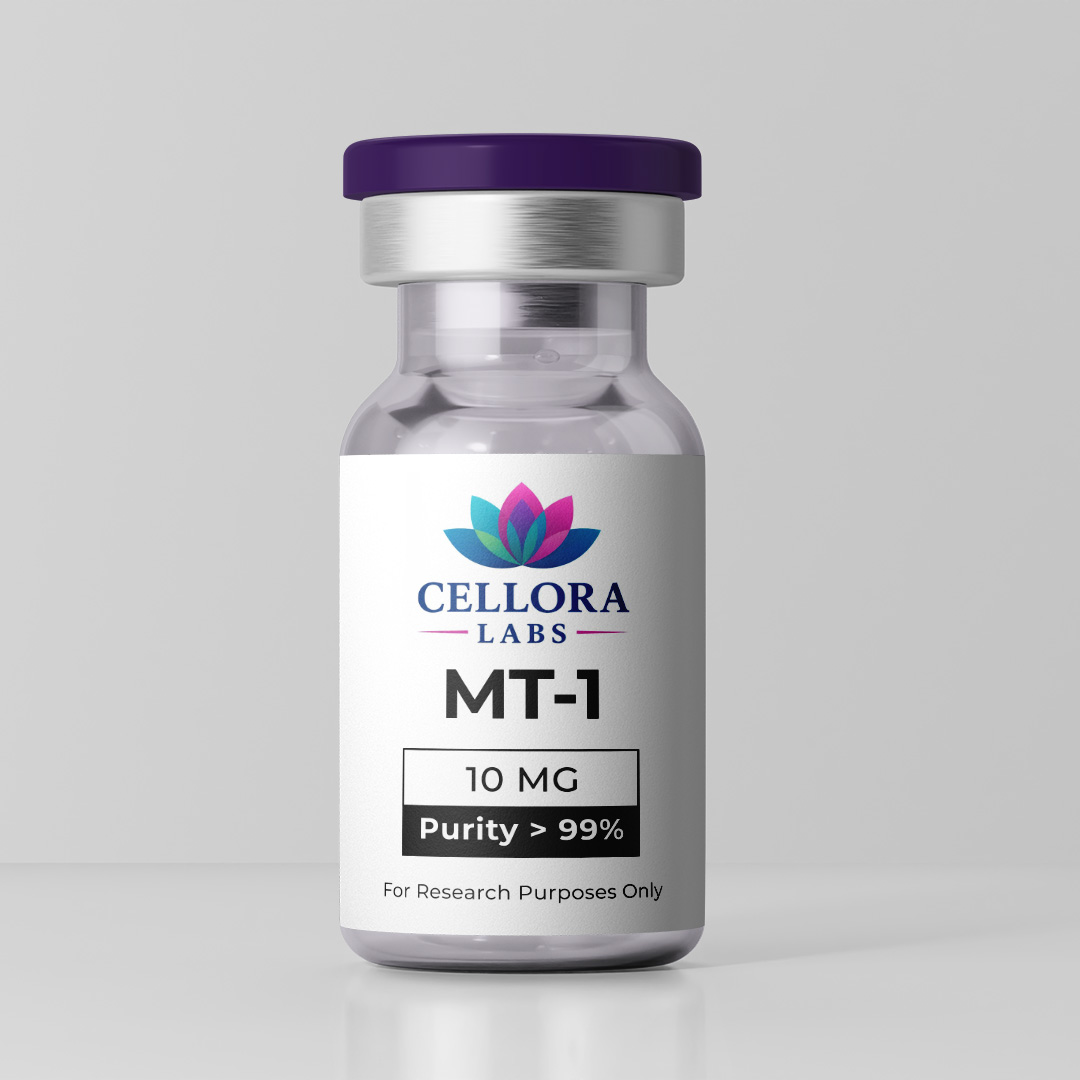
MT-1 Advanced Research Compound Guide | CelloraLabs.store
Welcome to CelloraLabs.store, a dedicated platform focused on advanced biochemical research compounds and next-generation scientific exploration materials. This comprehensive guide explores one of the most widely discussed melanocortin-based research peptides in modern scientific literature, commonly known as MT-1, and its role in pigmentation pathways, receptor interaction, and broader research applications.
This content is structured using a silo SEO architecture, designed to improve topical authority, internal relevance, and search engine visibility while maintaining a clear, educational, and research-focused format.
🧬 Understanding MT-1 in Modern Research Science
The compound known as MT-1 is a synthetic analogue derived from naturally occurring alpha-melanocyte stimulating hormone (α-MSH). In scientific research contexts, it is primarily studied for its interaction with melanocortin receptors, particularly MC1R, which plays a central role in melanin production within melanocytes.
In biological systems, melanin is responsible for pigmentation in skin, hair, and eyes. The melanocortin pathway is therefore an important area of study in dermatological, endocrinological, and biochemical research fields.
At CelloraLabs.store, research materials are presented strictly for educational and laboratory investigation purposes, supporting scientific exploration into receptor-based peptide interactions and cellular signaling pathways.
🧪 The Biological Role of Melanocortin Pathways
The melanocortin system is a complex network of receptors and signaling molecules that regulate multiple physiological processes including pigmentation, energy balance, and inflammatory response modulation.
Melanocortin receptors (MC1–MC5) are distributed across various tissues in the body, each serving unique biological functions. MC1R, in particular, is heavily associated with melanogenesis—the process by which melanin is produced.
Research into MT-1 has primarily focused on how it binds to MC1R and stimulates eumelanin production, the darker form of melanin responsible for pigmentation changes observed in laboratory models.
⚙️ Mechanism of Action Explained
The mechanism of action of this compound is centered on receptor agonism within the melanocortin system.
When introduced into research models, MT-1 binds to melanocortin receptors, mimicking the natural activity of α-MSH. This binding triggers a cascade of intracellular signaling events involving cyclic adenosine monophosphate (cAMP), which ultimately influences gene expression linked to melanin synthesis.
Key biochemical steps include:
- Activation of MC1R receptors
- Increased intracellular cAMP levels
- Stimulation of tyrosinase enzyme activity
- Enhanced melanin production within melanocytes
This receptor-driven pathway is widely studied in molecular biology for its role in pigmentation research and cellular response behavior.
🧬 Pigmentation Research and Cellular Response
One of the most extensively studied areas involving MT-1 is pigmentation research. Scientists investigate how melanocortin signaling affects melanin distribution, density, and expression patterns in controlled environments.
Melanin exists in two primary forms:
- Eumelanin (dark pigment)
- Pheomelanin (light pigment)
Research suggests that melanocortin receptor activation may influence the ratio between these two pigment types, making it a valuable model for studying pigmentation regulation.
At CelloraLabs.store, this compound is positioned within a broader research framework focused on cellular signaling pathways and biochemical receptor studies.
📊 Scientific Research Applications
Research involving melanocortin analogues such as MT-1 spans multiple scientific disciplines:
Dermatological Research
Studies explore pigmentation pathways, UV response mechanisms, and melanocyte behavior under controlled conditions.
Endocrine System Studies
The melanocortin system is partially regulated through endocrine signaling, making it relevant to hormonal research.
Molecular Biology
Researchers examine receptor binding affinity, intracellular signaling cascades, and peptide-receptor interactions.
Cellular Communication Studies
Investigations focus on how melanocytes communicate and respond to external signaling molecules.
🧠 Receptor Signaling and Molecular Interaction
Melanocortin receptors belong to the G-protein coupled receptor (GPCR) family, which are essential in transmitting signals from extracellular molecules to intracellular pathways.
When MT-1 interacts with MC1R, it triggers conformational changes in the receptor structure, leading to activation of downstream signaling proteins. This process is essential for understanding how peptides influence cellular behavior.
Research continues to explore receptor sensitivity, binding efficiency, and signal amplification within melanocortin pathways.
🧬 Structural Science Behind Peptide Analogues
Peptides like MT-1 are short chains of amino acids designed to mimic naturally occurring biological molecules. Their structural simplicity allows for targeted receptor interaction while maintaining high specificity.
In laboratory research, peptide stability, binding affinity, and molecular degradation rates are critical areas of analysis.
Understanding these structural properties helps scientists evaluate how synthetic analogues compare to endogenous hormones in biological systems.
📚 Research Importance in Modern Biochemistry
The study of melanocortin analogues has contributed significantly to advancements in:
- Receptor pharmacology
- Signal transduction research
- Peptide synthesis technology
- Cellular response mapping
These fields collectively support a deeper understanding of how biological systems regulate pigmentation and cellular communication.
At CelloraLabs.store, research compounds are curated to support academic, laboratory, and scientific exploration into these evolving disciplines.
🧪 Laboratory Research Applications
In controlled scientific environments, compounds like MT-1 are used to observe:
- Receptor activation patterns
- Cellular pigmentation responses
- Dose-dependent signaling variations
- Molecular stability in biological systems
These studies contribute to broader knowledge in peptide science and receptor biology.
🧬 Safety, Ethics, and Research Compliance
All materials referenced at CelloraLabs.store are intended strictly for research and educational purposes only.
They are not classified for human consumption, medical treatment, or therapeutic use. Researchers and professionals utilize these compounds under controlled laboratory conditions to ensure ethical compliance and scientific accuracy.
Proper handling protocols, laboratory safety standards, and institutional guidelines should always be followed when working with research peptides.
🔗 Internal Silo SEO Structure (CelloraLabs.store)
To strengthen topical authority and improve indexing, the following silo structure is recommended across the website:
🧪 Main Category: Peptide Research Compounds
- MT-1 Research Compound (this page)
- Melanocortin Peptides Overview
- Receptor Agonists Guide
🧬 Supporting Cluster: Cellular Signaling
- GPCR Mechanisms Explained
- cAMP Pathway Research
- Melanocyte Biology Studies
📊 Advanced Research Section
- Peptide Stability Analysis
- Molecular Binding Affinity Studies
- Synthetic vs Natural Peptides
📚 Educational Blog Hub
- Understanding Pigmentation Science
- Introduction to Melanocortin Systems
- Basics of Peptide Chemistry
This silo structure improves internal linking and helps search engines understand topical relevance across CelloraLabs.store.
❓ Frequently Asked Research Questions
What is the primary function of MT-1 in research?
It is primarily studied for its interaction with melanocortin receptors and its influence on melanin production pathways in cellular models.
How does melanocortin signaling work?
It operates through GPCR receptors that activate intracellular signaling cascades, influencing gene expression and cellular activity.
Why is pigmentation research important?
It helps scientists understand biological responses to environmental stimuli and cellular regulation mechanisms.
Is this compound intended for medical use?
No. All compounds discussed on CelloraLabs.store are strictly for research and laboratory purposes only.
🧠 Future Directions in Melanocortin Research
The future of melanocortin research is expanding into areas such as:
- Genetic expression mapping
- Receptor engineering
- Synthetic peptide optimization
- Cellular response modeling
Advancements in biotechnology and molecular science continue to refine how researchers understand peptide-receptor interactions.
These developments may eventually lead to deeper insights into pigmentation science, cellular communication, and biochemical regulation systems.
🧬 Final Scientific Overview
The compound studied as MT-1 remains an important tool in biochemical research due to its selective receptor activity and predictable molecular behavior.
Its relevance spans across multiple disciplines including dermatology research, molecular biology, and peptide chemistry. As scientific understanding evolves, melanocortin-based research continues to provide valuable insights into how biological systems regulate pigmentation and cellular signaling.
At CelloraLabs.store, our mission is to support structured scientific exploration through high-quality educational resources and research-focused compounds, enabling deeper understanding of complex biochemical systems.

Reviews
There are no reviews yet.