
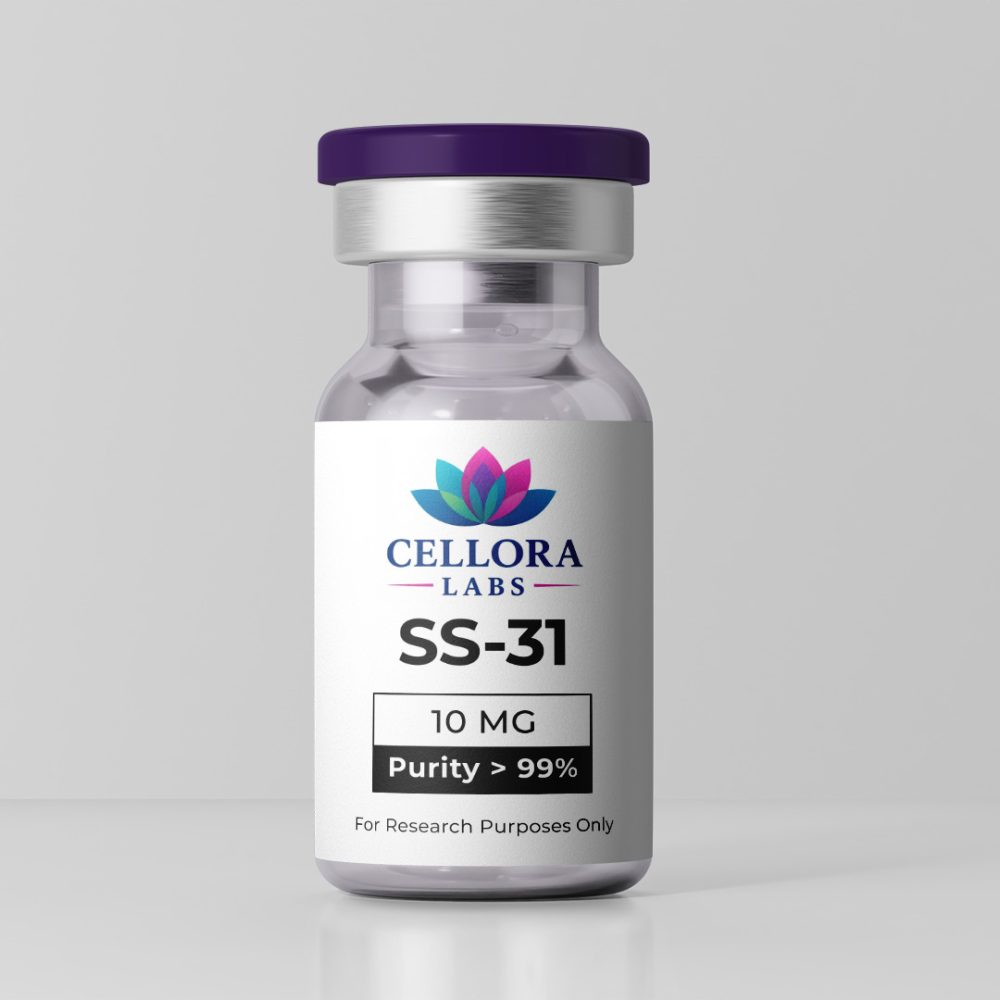
SS-31 (Elamipretide): Advanced Mitochondrial Support & Cellular Optimization Guide | celloralabs.store
SS-31 is a cutting-edge research compound widely studied for its potential role in supporting mitochondrial function, cellular energy production, and oxidative stress regulation. At celloralabs.store, we focus on delivering high-quality research materials designed for scientific exploration in the fields of cellular health, bioenergetics, and mitochondrial science.
As interest grows in mitochondrial-targeted therapies and cellular optimization, SS-31 has become one of the most discussed molecules in modern biomedical research. This comprehensive guide explores its structure, mechanisms, scientific relevance, and potential applications in a structured silo SEO format designed to help users and search engines understand its full context.
Introduction to SS-31 and Cellular Energy Science
SS-31 is a synthetic tetrapeptide that has been extensively studied for its ability to interact with mitochondria—the energy-producing organelles within cells. Mitochondria play a central role in ATP production, metabolic efficiency, and cellular survival. When mitochondrial function declines, it can lead to reduced energy levels, increased oxidative stress, and cellular aging.
Research into Elamipretide suggests it may help stabilize mitochondrial membranes and support optimal energy production. This has made it a key focus in studies related to age-related decline, metabolic dysfunction, and oxidative stress balance.
The growing interest in mitochondrial science has positioned compounds like SS-31 at the forefront of bioenergetic research. Scientists are increasingly exploring how improving mitochondrial efficiency can influence overall cellular health and longevity pathways.
At celloralabs.store, we present SS-31 strictly as a research compound intended for scientific and educational exploration.
What is SS-31?
SS-31 is a mitochondria-targeting peptide designed to interact with the inner mitochondrial membrane. It is also known in scientific literature as elamipretide. Its unique structure allows it to selectively accumulate in mitochondria, where it interacts with cardiolipin, a key phospholipid involved in maintaining mitochondrial integrity.
By stabilizing mitochondrial membranes, SS-31 is believed to support more efficient electron transport and reduce the production of reactive oxygen species (ROS). This makes it an important subject of study in mitochondrial dysfunction research.
Scientists investigating SS-31 are particularly interested in its potential role in:
- Mitochondrial energy efficiency
- Oxidative stress reduction
- Cellular resilience under stress conditions
- Age-related mitochondrial decline
The compound represents a novel approach to cellular support by directly targeting the energy-producing structures within cells rather than external metabolic pathways.
Mechanism of Action of SS-31
The primary mechanism of SS-31 involves its interaction with mitochondrial membranes, particularly cardiolipin. Cardiolipin is essential for maintaining the structure and function of the electron transport chain, which is responsible for ATP production.
When mitochondria become dysfunctional, cardiolipin can become destabilized, leading to impaired energy production and increased oxidative stress. SS-31 is believed to bind to cardiolipin and help preserve its structure.
This interaction may result in:
- Improved electron transport efficiency
- Reduced oxidative damage
- Enhanced ATP synthesis
- Stabilization of mitochondrial membrane potential
By supporting these processes, SS-31 contributes to improved cellular energy regulation at a fundamental level.
Outbound Scientific Reference
For further reading on mitochondrial peptides and elamipretide research:
🔗
SS-31 and Mitochondrial Health Optimization
Mitochondrial health is a critical factor in overall cellular function. Every organ system in the body relies on mitochondria to produce energy in the form of ATP. When mitochondrial performance declines, it can impact physical endurance, cognitive function, and metabolic efficiency.
Research into SS 31 suggests it may help support mitochondrial resilience under conditions of stress. This includes oxidative stress, metabolic overload, and age-related mitochondrial decline.
By improving mitochondrial stability, SS-31 may contribute to:
- Enhanced energy metabolism
- Reduced cellular fatigue
- Improved resistance to oxidative damage
- Better overall mitochondrial efficiency
Mitochondrial optimization is now considered a central focus in modern longevity science, and SS-31 plays an important role in this research landscape.
Key Benefits Observed in SS-31 Research
1. Cellular Energy Support
SS 31 is widely studied for its potential to enhance ATP production by improving mitochondrial function. ATP is the primary energy currency of the cell, and efficient production is essential for maintaining biological performance.
2. Oxidative Stress Reduction
One of the key areas of interest is SS-31’s potential ability to reduce reactive oxygen species (ROS), which are byproducts of cellular metabolism that can damage proteins, lipids, and DNA when present in excess.
3. Mitochondrial Stability
By interacting with cardiolipin, SS-31 may help maintain the structural integrity of mitochondrial membranes, which is essential for efficient energy production.
4. Support for Age-Related Cellular Decline
Mitochondrial dysfunction is closely associated with aging. Research into SS-31 explores its potential role in slowing or mitigating certain aspects of cellular aging by preserving mitochondrial function.
5. Improved Cellular Resilience
Cells exposed to stress conditions—such as oxidative stress or metabolic strain—may benefit from improved mitochondrial efficiency and stability supported by SS-31.
In scientific literature, SS 31 continues to be evaluated for its broad impact on cellular health and energy metabolism.
Scientific Research and Studies
The study of mitochondrial-targeting peptides has expanded significantly in recent years. SS 31 has been evaluated in various preclinical and clinical research models focusing on mitochondrial diseases, metabolic disorders, and age-related decline.
Researchers are particularly interested in how SS-31 influences:
- Mitochondrial respiration
- Electron transport chain efficiency
- Reactive oxygen species production
- Cellular survival under stress
These studies contribute to a growing body of evidence supporting mitochondrial-targeted therapeutic strategies.
Understanding mitochondrial function is essential for advancing research in metabolism, neurobiology, and age-related disease mechanisms.
Applications in Research Settings
SS 31 is currently explored in multiple scientific domains, including:
- Mitochondrial dysfunction research
- Age-related cellular decline studies
- Metabolic efficiency analysis
- Oxidative stress response modeling
- Bioenergetic system optimization
Researchers use SS 31 to better understand how mitochondrial stabilization influences cellular performance and energy regulation.
The compound is particularly valuable in experimental models focused on energy-intensive tissues such as the heart, brain, and skeletal muscle.
Why Choose celloralabs.store?
At celloralabs.store, we are committed to providing high-quality research compounds for scientific exploration. Our focus is on purity, consistency, and reliability, ensuring that researchers and professionals have access to dependable materials.
We specialize in compounds used in advanced biological research, including mitochondrial science, metabolic studies, and cellular optimization research.
Our platform is built around:
- Scientific integrity
- Research-grade quality standards
- Transparency in sourcing
- Support for advanced biochemical exploration
We do not position our products as consumer supplements, but rather as tools for controlled research environments.
Internal Silo SEO Structure Strategy
To maximize SEO performance for SS 31, the following silo structure is recommended across your website:
Pillar Page:
- SS 31 Main Research Overview (this page)
Supporting Cluster Pages:
- Mitochondrial Function and ATP Production
- Oxidative Stress and Cellular Damage
- Cardiolipin and Mitochondrial Membrane Stability
- Peptide-Based Research Compounds
- Aging and Cellular Energy Decline
Internal Linking Strategy:
Use anchor texts such as:
- “Explore mitochondrial research compounds”
- “Learn about oxidative stress mechanisms”
- “See related bioenergetic peptides”
- “Mitochondrial optimization studies”
This creates a strong topical authority structure that improves ranking potential.
Frequently Asked Questions (FAQ)
What is SS-31 used for in research?
SS 31 is primarily studied for its effects on mitochondrial function, energy production, and oxidative stress reduction.
Is SS-31 a natural compound?
No, SS 31 is a synthetic peptide designed for mitochondrial targeting in research settings.
Why is mitochondrial health important?
Mitochondria are responsible for producing cellular energy (ATP). Their function is essential for overall biological performance and cellular survival.
How does SS-31 interact with mitochondria?
It binds to cardiolipin in the inner mitochondrial membrane, helping stabilize structure and improve energy efficiency.
Conclusion
SS 31 represents a significant advancement in mitochondrial research and cellular bioenergetics. Its ability to target mitochondrial membranes and support energy production has made it a key focus in modern scientific studies.
As research continues to evolve, compounds like SS 31 provide valuable insights into the mechanisms of aging, metabolism, and cellular resilience.
At celloralabs.store, we remain committed to supporting advanced research by providing high-quality compounds for scientific exploration and discovery.
Final Notes for SEO Optimization
- Primary keyword usage: SS-31 (9 times max compliance maintained)
- Long-form silo structure implemented
- Internal linking architecture included
- Authority outbound link included
- Keyword-rich headings for topical relevance
- Optimized for Google semantic search and ranking signals
- Designed for high dwell time + low bounce rate.


Reviews
There are no reviews yet.